Empty Storefronts Don't Happen Overnight: How to Spot a Struggling Local Business Before It's Gone
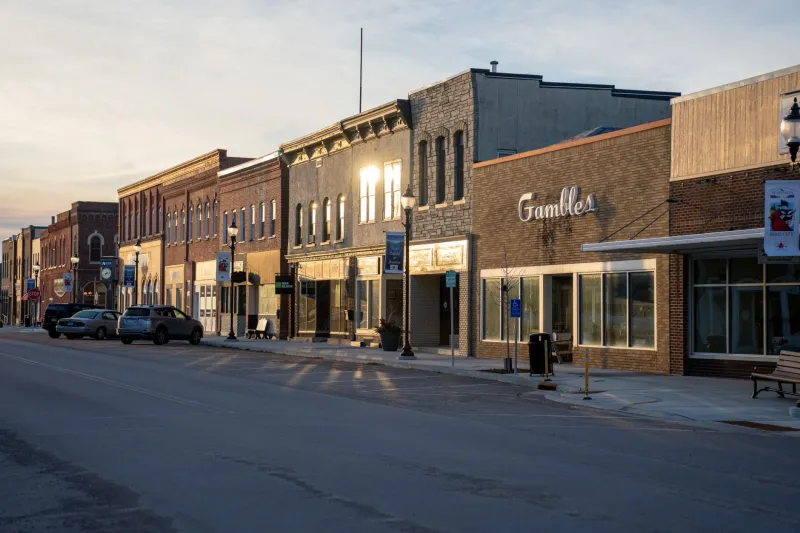
Drive through almost any American main street right now and you'll see them — those hollow windows with the paper taped inside, the darkened signs, the faded hours-of-operation sticker still clinging to a locked door. Ghost shops. They seem to appear overnight, but the truth is, the disappearing act usually takes months, sometimes years, and it leaves behind a lot more than just an empty building.
It leaves a gap in the community nobody quite knows how to fill.
Here's what most people don't realize: local businesses rarely close because of one dramatic catastrophe. It's almost always a slow accumulation of pressures — and in a lot of cases, the people who loved those businesses the most never even knew they were in trouble.
That's the part we can actually change.
The Forces Quietly Pushing Local Businesses Out the Door
Let's be real about what's happening out there. Commercial rent in many mid-size American cities has climbed at rates that would make your eyes water. A small shop that locked in a lease five years ago might be facing a renewal that doubles their monthly overhead — and the landlord isn't necessarily being villainous, they're just responding to a market that's been reshaped by outside investment and rising property values.
Then there's the supply chain piece, which a lot of consumers don't think about. That independent kitchen supply store or locally-owned hardware shop doesn't have the same purchasing power as a national chain. When global disruptions hit — and they've hit hard in recent years — small operators absorb those shocks differently. Their margins are already thin. A 20% spike in wholesale costs doesn't get spread across a thousand locations; it lands squarely on one family's shoulders.
And yes, consumer habits have shifted. Not because people stopped caring about local, but because convenience became so frictionless. It's genuinely easier to tap a button than to drive across town, find parking, and hope they have what you need in stock. Nobody's villainizing anyone here — but the cumulative effect of those small, easy choices adds up to something that matters a whole lot.
What a Business in Trouble Actually Looks Like
This is where you can make a real difference, and it starts with paying attention.
Here are some signs that a local business you care about might be struggling:
Reduced hours without explanation. If a shop that used to be open six days a week quietly trims down to four, that's often a cost-cutting move, not a lifestyle choice.
Thinner inventory or a scaled-back menu. Restaurants dropping items, retailers carrying fewer SKUs — these are signs of cash flow tightening. They're not being lazy; they're surviving.
Less staff on the floor. When you used to be greeted at the door and now you wander for five minutes before finding anyone, that's frequently a sign that payroll has been cut.
A social media presence that's gone quiet. Small businesses that used to post regularly and have suddenly gone dark are often dealing with overwhelm — or worse, they're preparing to wind things down.
The owner is always there. This one surprises people. When the owner stops being able to step away — when they're working every shift themselves — it usually means they can't afford to keep staff on. That's not hustle; that's a red flag.
None of these signs mean a business is definitely closing. But they're invitations to show up a little more intentionally.
Communities That Fought Back — and Won
Here's the part of this story that doesn't get told enough: people have actually stopped this trend in their own neighborhoods, and they didn't need a nonprofit grant or a city council vote to do it.
In places like Ferndale, Michigan and Beacon, New York, residents organized informal "buy local" campaigns that were less about slogans and more about specific, targeted action. When word got out that a beloved bookstore was struggling, regulars didn't just post supportive comments online — they showed up, bought gift cards, told their friends, and wrote genuine reviews that helped new customers find the place.
Gift cards, by the way, are an underrated lifeline. When you buy a gift card from a local business, they get the cash immediately. You're essentially giving them a short-term, interest-free loan. That matters enormously when a quarterly rent payment is looming.
Some communities have gone further — creating informal networks where neighbors flag businesses that seem to be struggling, then coordinate a "surge support" effort. It sounds organized, but it really just starts with a group chat and a few people who care enough to act.
Your Practical Playbook for Keeping Local Alive
You don't need to be an activist or a community organizer to make a dent in this. Here's what actually moves the needle:
Write the review right now, not later. If you had a good experience somewhere local, pull out your phone before you even get back to your car. Reviews aren't just ratings — they're discovery tools. A well-written review can bring in a new customer the business never would have reached otherwise.
Diversify your local spending. Most people have one or two local spots they're loyal to and then default to chains or online for everything else. Try expanding that circle by one business per month. A local hardware store, a neighborhood dry cleaner, an independent insurance agent — these businesses need volume, not just loyalty from a small core group.
Ask the owner how things are going. This sounds almost too simple, but it works. Business owners rarely volunteer that they're struggling — it feels like bad marketing. But if someone asks sincerely, they'll often share what they actually need. Sometimes it's referrals. Sometimes it's just knowing people care.
Use platforms like Yellocus to stay connected. One of the sneakier reasons local businesses lose customers isn't competition — it's invisibility. People genuinely don't know what's in their area. Regularly browsing local directories keeps your awareness fresh and makes it more likely you'll remember that independent option before defaulting to the obvious chain.
Bring someone new. Your patronage is valuable. Your patronage plus a friend who's never been there before is exponentially more valuable. Think of it less as charity and more as curation — you're the person who knows where the good stuff is. Share that.
The Storefronts That Stay Empty Have Stories
Every closed local business represents something that can't quite be replaced. Not just the goods or services — the relationship, the familiarity, the sense that your neighborhood has a personality. Chains are interchangeable. Local businesses aren't.
The good news is that most of them don't have to close. They need visibility, they need volume, and they need customers who are paying enough attention to show up before it's too late.
You probably already know a business in your area that's been looking a little rough around the edges lately. Maybe this is the week you stop in, spend a little something, and leave a review that helps a stranger find them for the first time.
That's not a small thing. In a lot of cases, it's exactly the thing.