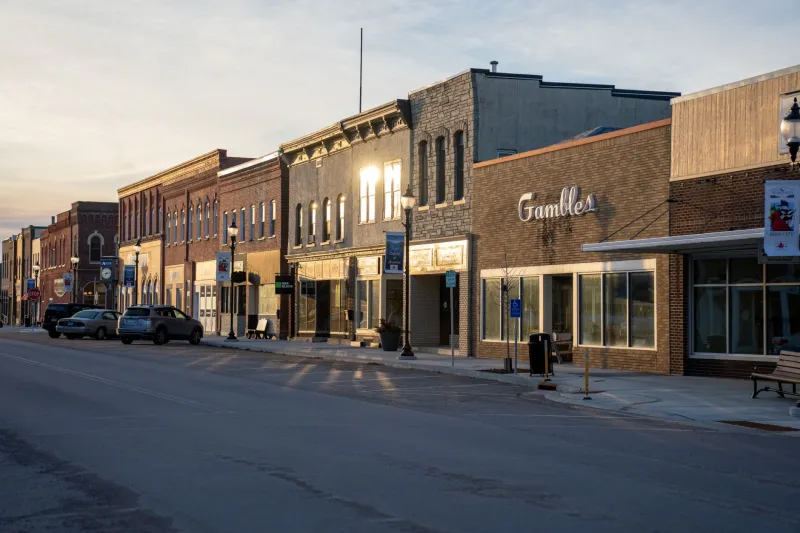
What Your Neighborhood's Service Businesses Are Actually Telling You About the Economy

The Forecast Nobody's Broadcasting on the News
Forget Wall Street for a second. The most honest economic data you'll ever encounter isn't buried in a government report or behind a paywall. It's hanging on a "Now Hiring" sign at your neighborhood auto shop, or quietly embedded in the fact that your favorite house painter just booked out four months in advance.
Local service businesses are, in a very real sense, living thermometers for your community's financial health. They respond to economic pressure in real time — before headlines catch up, before economists weigh in, and long before anyone on cable news starts explaining what it all means. If you know what to look for, you can become your own economic forecaster just by paying attention to what's happening on your block.
Hiring Patterns Are a Dead Giveaway
One of the easiest signals to spot is how local businesses are staffing up — or scaling back. When a plumbing company adds two new vans to its fleet and starts running ads for apprentice plumbers, that's not just a business decision. That's a confidence signal. The owner believes demand is going to stay strong enough to justify the overhead.
Flip that around, and you get a different picture. When the landscaping crew that used to show up with five people suddenly shows up with three, or when a local cleaning service quietly stops advertising and starts referring overflow work to competitors, those are signs of a business tightening its belt. It doesn't necessarily mean catastrophe — but it does mean something has shifted.
Pay attention to job postings from local service providers in your area. A cluster of businesses all hiring at the same time usually signals a growing community with rising demand. A dry spell in local job listings, on the other hand, often precedes a broader slowdown.
Pricing Tells the Story Too
Service pricing is another underrated economic indicator. When a local electrician raises their hourly rate, they're not doing it arbitrarily. They're responding to the cost of materials, the competition for skilled labor, and what the local market can bear. A wave of price increases across multiple service categories — pest control, HVAC, auto repair — often signals inflationary pressure hitting Main Street before it shows up in your grocery bill.
But here's the other side of that coin: when local service providers start running unusually aggressive promotions, offering steep discounts, or bundling services in ways they never have before, that can signal softening demand. They're competing harder for a shrinking pool of customers. That's worth noticing.
Neither trend is automatically bad for you as a consumer. Rising prices in a booming local economy might mean it's a great time to lock in long-term service contracts before rates climb further. A slowdown, meanwhile, might be the perfect moment to negotiate or take on that renovation project you've been putting off.
Expansion and Contraction: The Big Moves
When a local roofing company opens a second location across town, or a family-owned HVAC business starts advertising in a neighboring zip code, that's a major economic green light. These businesses aren't expanding on a whim — they're following demand, and demand is following population growth, new construction, or rising household incomes in the area.
On the flip side, contraction is just as telling. A service business that quietly drops certain offerings, reduces its service radius, or stops answering calls on weekends isn't just making operational tweaks. It's adjusting to a reality where the work isn't there the way it used to be.
Keep an eye on local business directories — platforms like Yellocus make it easy to track which businesses are new to your area, which ones have been around for years, and which ones have recently gone quiet. The pattern of entries and exits in a directory can sketch out a surprisingly detailed economic map of your neighborhood.
What Product and Service Shifts Tell You
Beyond hiring and pricing, the actual services local businesses offer — and stop offering — reveal a lot. A pool cleaning company that suddenly starts advertising home exterior washing and gutter cleaning is diversifying because pool season revenue alone isn't cutting it. A lawn care company that pivots to snow removal or holiday lighting installation is signaling that year-round cash flow has become harder to sustain from a single service line.
These pivots aren't failures. They're adaptations. But they tell you something about the economic conditions those businesses are navigating. When you see a lot of local service providers broadening their offerings simultaneously, it often means the local economy is in a transition period — demand is shifting, and smart operators are adjusting before the wave hits.
Conversely, when specialists start getting really specific — a cleaning company that focuses exclusively on post-construction cleanup, or a landscaper who goes all-in on high-end design work — that's often a sign of a maturing, more affluent local market. Specialization is a luxury businesses can afford when there's enough demand to support it.
How to Use This Information in Your Daily Life
You don't need an economics degree to use any of this. Here's how to start paying attention:
Check in with local review platforms regularly. New reviews, new businesses, and even businesses that haven't been reviewed in a while are all data points. A business that was thriving two years ago but has gone quiet on Yellocus might be worth a follow-up call before you book.
Talk to the people doing the work. Your plumber, your electrician, your lawn guy — they talk to dozens of households every week. Ask them how business is going. Most will give you an honest answer, and that answer is often more useful than anything you'll read in a local newspaper.
Track price changes over time. If you've used the same HVAC company for five years, you have a baseline. When their rates jump significantly, ask why. The answer will tell you something real about the local market for skilled labor and materials.
Notice the small stuff. New uniforms, newer trucks, a freshly updated website — these are signs of investment and confidence. Worn equipment, outdated contact info, and unanswered calls are the opposite.
Your Community Is Talking — Are You Listening?
The businesses in your neighborhood aren't just places to get things done. They're living, breathing economic organisms that respond constantly to the conditions around them. Their choices — who they hire, what they charge, where they expand, what they stop offering — paint a detailed picture of your community's financial health that no single report could replicate.
The best part? You don't have to wait for anyone to hand you this information. It's already out there, visible to anyone who takes the time to look. Start paying attention, and you might be surprised how much your local service ecosystem has been trying to tell you all along.