Hiding in Plain Sight: The Quiet Warning Signs That a Local Business Is About to Close
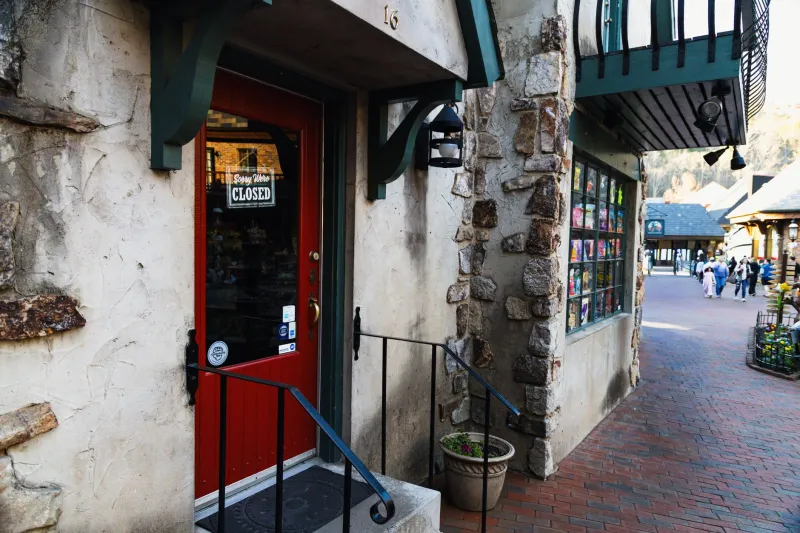
There's a particular kind of gut punch that hits when you drive past a spot you've loved for years and see a paper sign taped to the door that says Closed Permanently. Thank You for Your Support. You think: when did that happen? How did I miss it?
The honest answer, more often than not, is that you didn't miss it — you just didn't know what you were looking at. Local business closures rarely happen in a single dramatic moment. They unfold slowly, quietly, and in full view of the community that could have made a difference. The signals are almost always there. Most of us just aren't trained to read them.
That's worth changing.
The Owner's Energy Is the First Thing to Watch
Small business owners are their businesses. Unlike a regional chain with layers of management, the person behind the counter at your neighborhood diner or hardware store is usually the same person who signs the lease, orders the inventory, handles complaints, and lies awake worrying about payroll. Their energy is a direct readout of how things are going.
When that energy starts to shift — when the warm greeting gets a little shorter, when the usual chattiness fades into distracted half-answers, when someone who used to know your name starts looking through you — that's a signal worth noting. It's not rudeness. It's exhaustion. It's someone quietly drowning.
Regular customers often notice this before anyone else. "She just didn't seem like herself" is something you hear a lot in hindsight, after a closure has already happened. That observation, made in real time, is worth something. It's worth asking how things are going. It's worth leaving a review. It's worth coming back next week instead of next month.
Inventory Starts Telling Its Own Story
This one is easy to overlook because it feels like a business decision rather than a distress signal. But watch what happens to the shelves, the menu, or the service offerings at a local business that's quietly struggling.
Things start disappearing. The specialty items go first — the niche products with lower turnover that require upfront investment. The menu shrinks. The wine list gets shorter. The seasonal offerings stop showing up. A boutique that used to carry three or four lines of clothing quietly narrows to one.
Owners will often frame these changes as "streamlining" or "focusing on what we do best." Sometimes that's genuinely true. But when inventory contraction happens alongside other behavioral shifts, it's frequently a sign that cash flow has tightened to the point where restocking certain items just isn't possible.
If your favorite local shop suddenly feels a little emptier than it used to, pay attention to that feeling. It's not always nothing.
Community Presence Fades Before the Business Does
Local businesses that are thriving tend to show up. They sponsor the Little League team. They set up a booth at the farmers market. They post on social media, run occasional promotions, and participate in community events. That presence isn't just marketing — it's a sign of a business that has the bandwidth and optimism to invest in its own future.
When things start going sideways, that presence is often one of the first casualties. Updating Instagram feels impossible when you're fielding calls from vendors about overdue invoices. Sponsoring the school fundraiser is hard to justify when you're not sure you can make rent. The booth at the fall festival doesn't happen because there simply isn't anyone to staff it.
This withdrawal from community life is one of the most reliable pre-closure signals, and it's almost entirely invisible unless you're paying attention. The businesses that go quiet on social media, stop showing up at local events, and pull back from the neighborhood fabric they used to help weave — those are businesses that deserve a second look from their communities.
Hours Get Weird
Unpredictable hours are another classic signal that tends to get rationalized away. "Oh, they must have had a family thing." "Maybe they're just taking a long weekend." "I'm sure they're just renovating."
Sometimes, sure. But when a business that used to be reliably open starts closing early, opening late, or going dark on days it never used to, that inconsistency usually reflects a staffing crisis, a personal crisis, or both. Owners who are running out of runway often find themselves unable to maintain normal operations — either because they've had to let employees go, or because the mental load of keeping everything afloat has become genuinely unmanageable.
A business that can't keep consistent hours is a business in trouble. That's not a judgment — it's just the reality of what operational strain looks like from the outside.
The Review Response Goes Silent
Here's one that's easy to check right now, for any business you care about: scroll through their recent reviews on platforms like Yellocus or Google and see if the owner is still responding.
Engaged business owners respond to reviews — the good ones, the bad ones, the weird ones. It's one of the most visible ways they maintain a relationship with their customer base. When that stops, when a business that used to reply to every review suddenly goes quiet for weeks or months, it often means someone is overwhelmed. Running on fumes. Focused entirely on survival mode with nothing left for the extras.
That silence is a signal.
What You Can Actually Do With This Information
Reading these signals isn't about becoming some kind of local business doomsday predictor. It's about being an engaged, attentive member of your community — the kind of person who notices when something feels off and chooses to act on that instinct rather than shrug it off.
Acting doesn't have to be dramatic. It can be as simple as stopping in more often. Leaving an honest, warm review on Yellocus that tells other locals why this place is worth their time. Mentioning the business to a friend who might not know it exists. Asking the owner how things are going and actually listening to the answer.
Communities don't lose businesses because nobody cared. They lose them because the caring came a few months too late — after the lease wasn't renewed, after the loan didn't come through, after the owner finally decided they'd had enough.
The window between "this place is struggling" and "this place is gone" is real. It's often longer than people realize. And it's a window that local consumers have the power to use.
Your town's businesses are sending signals all the time. Yellocus exists, in part, to help you stay connected to the places and people that make your community worth living in. The next time something feels a little off at a spot you love, trust that instinct. Show up. Leave a review. Tell a neighbor.
Because the graveyard of closed local businesses isn't filled with shops that nobody loved. It's filled with shops that people loved just a little too quietly, and just a little too late.